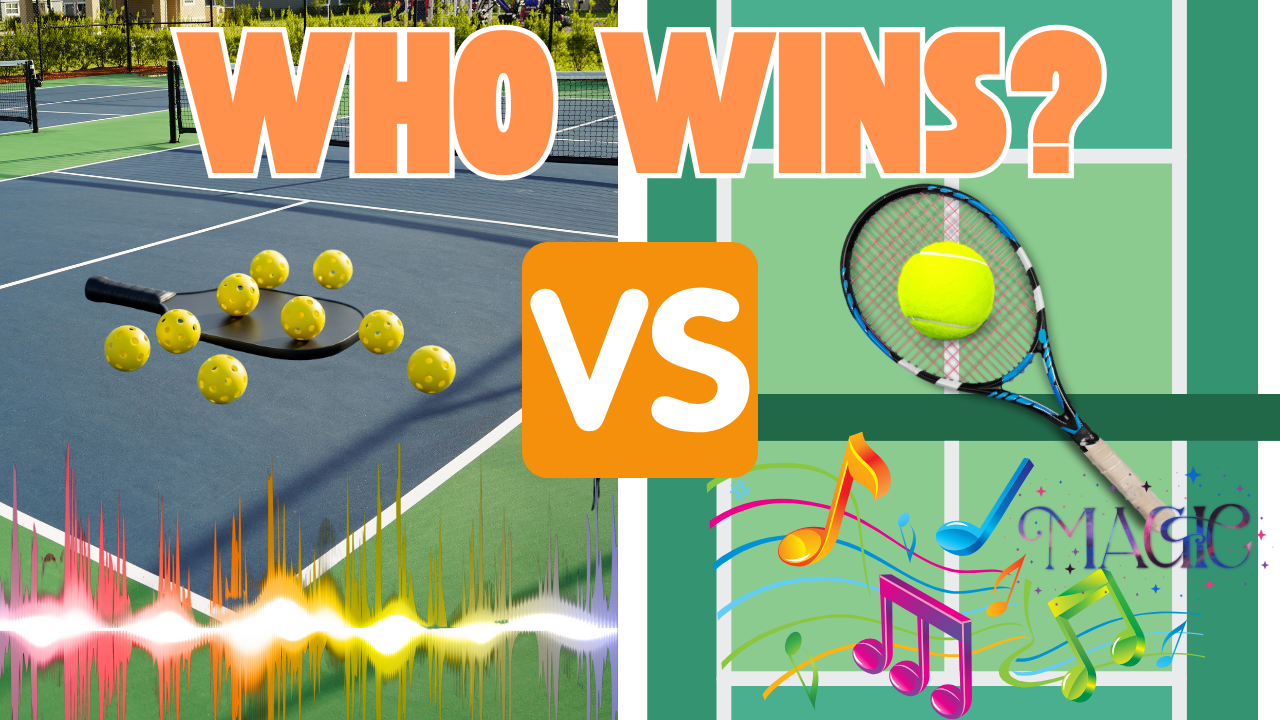
Pickleball is booming. Tennis is deeply rooted. But is it really tennis vs pickleball? The clash you hear at parks and clubs is not just about lines on the court — it’s about sound, space, money, and culture. Both games bring something valuable to a community, but they also compete for the same real estate and attention. Here’s a pragmatic look at the state of play in 2026 and how both sports can co-exist without one wiping out the other.
The Sound Issue: Why Pickleball Feels Louder
“The acoustic assault.” — often used to describe the high-pitched pop of the pickleball
That phrase captures a common complaint. Pickleball uses a hard paddle (wood originally, now graphite and composite) and a perforated plastic ball. The result is a sharp, higher-frequency pop. Tennis produces a softer, fuzz-on-strings sound that many players, namely Billie Jean King call “magical” — especially when you strike the sweet spot.
Sound matters for enjoyment and neighborhood tolerance. Key differences:
Pickleball: Shorter court, closer players, frequent volleys, constant high-pitched pops.
Tennis: Longer rallies, softer string sounds, quieter bounces on grass, larger court spacing.
For many, the noise isn’t a barrier to playing — it’s part of the atmosphere. Pickleball often sounds like laughter and cheering; tennis usually carries a different, quieter cadence. The acoustic preference is personal, not universal.
Courts, Real Estate, and Club Economics
Real estate and revenue are driving the conversion debate. One tennis court can sometimes be reconfigured into four pickleball courts. That’s more players, more booking slots, and more opportunity for food and drink revenue at clubs and local tournaments.
Important numbers to know:
U.S. players: About 25.7 million people play tennis at least once a year versus roughly 23 million pickleball players and growing.
Courts: Approximately 270,000 tennis courts and about 70,000 pickleball courts in the U.S.
Those figures show why clubs and parks consider conversion or multi-use design: pickleball packs courts more densely and fills them more consistently. Still, tennis is not disappearing — it has deep history, tradition, and a distinct fan base.
How facilities are responding
- Dedicated scheduling (tennis-only hours, pickleball-only hours).
- Multi-lined courts that show both sport layouts (not ideal for every player).
- Converting some courts to pickleball while keeping others for tennis.
- Turning courts into event venues seasonally (like transforming a tennis facility for a pickleball festival).
Social Dynamics: Why People Love Pickleball
Pickleball’s proximity changes play dynamics. Two players standing near the non-volley zone are only about 14 feet apart across the net. Conversations, laughter, and cheering come naturally. That social, approachable vibe helps explain the sport’s rapid growth among all ages — families, grandparents, and young athletes alike.
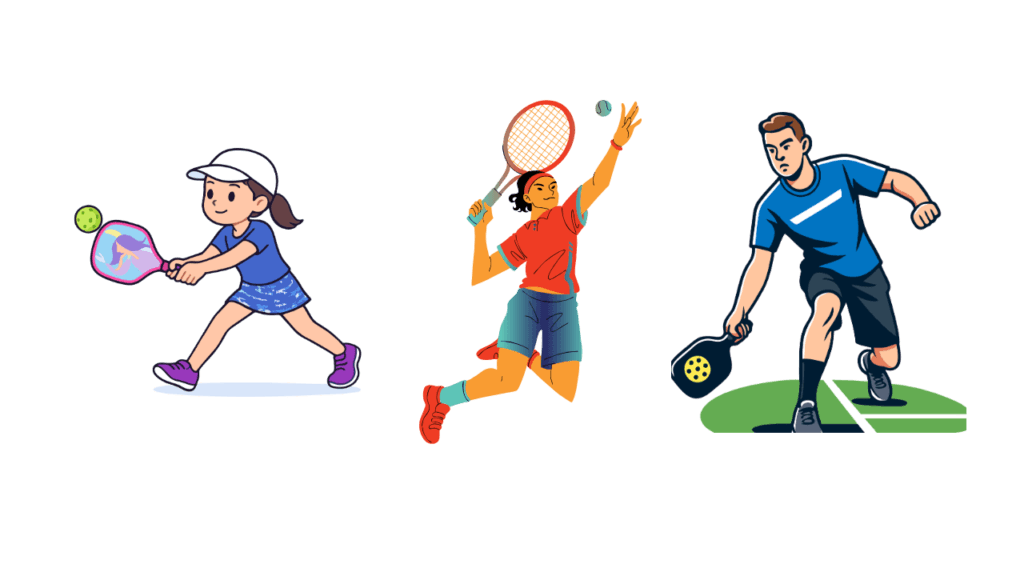
Tennis can be more solitary and requires more time for practice to maintain high-level skills. For players seeking social connection and quicker pick-up play, pickleball’s format fits perfectly.
Competitive Pathways and Pro Crossovers
High-level athletes and former tennis pros are joining pickleball for several reasons: continued competition after a tennis career, new earning opportunities, and the novelty of learning a different game. Examples include multiple former tennis pros who have moved into pickleball and exhibition play featuring well-known names that attract attention.
Differences in the competitive cultures:
Tennis players often practice with focused drills (serve baskets, target work).
Pickleball culture emphasizes playing points and matches; many players learn primarily by playing.
Prize money in pickleball is growing, but the viewing and broadcast ecosystem for tennis remains larger and more established.
Professional models are changing too. Some pickleball teams now pay players based on winning rather than guaranteeing salaries. That mirrors structures long present in tennis and other professional sports.
Practical Coexistence: Solutions for Players and Clubs
Both sports can thrive with thoughtful planning. Practical strategies include:
- Scheduled court times: Set tennis-only and pickleball-only windows to avoid friction.
- Separate courts where possible: Keep lines and net systems distinct to reduce wear and confusion.
- Programming: Host pickleball nights, parties, family sessions, and mixed-sport social events to bring both communities together.
- Communication and respect: Agree on local etiquette, quiet hours, and court maintenance responsibilities.
- Revenue-minded events: Use pickleball tournaments and socials to generate food, lodging, and local business income. Not to mention pickleball gear and equipment!
Tips for players
- Try both sports. Cross-training can sharpen reaction skills and keep you active.
- If noise bothers you, seek early-morning tennis or clubs with dedicated quiet hours.
- If you’re a club owner, consider small investments in resurfacing and portable net systems to allow multi-use without permanent conversions.
Quick Facts and Comparisons
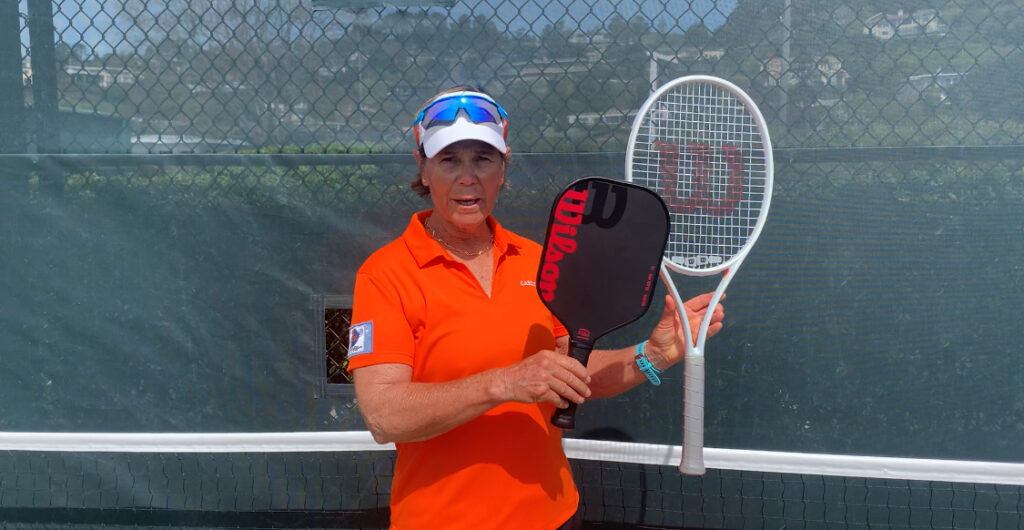
- Racket vs paddle length: Tennis racket ≈ 27 inches; pickleball paddle ≈ 17 inches.
- Court density: One tennis court can often host up to four pickleball courts.
- Brain benefits: Table tennis is often cited as excellent for cognitive sharpness, followed by pickleball and tennis — all great for brain health.
- Participation: Tennis still has a large player base, but pickleball is growing quickly and may surpass tennis participation in some metrics in 2026.
Final Takeaway
There’s no looming extinction for either sport. Pickleball is expanding because it’s social, accessible, and fits modern club economics. Tennis endures because of its tradition, global fandom, and unique athletic demands. The healthiest approach is pragmatic coexistence: thoughtful scheduling, flexible facilities, community-minded programming, and mutual respect between players.
Try both games, support smart facility planning, and keep the focus on what matters most — getting outdoors, staying active, and enjoying time with friends and family. Tennis and pickleball can co-exist in 2026. Let’s make it a win-win!
Made with VideoToBlog using Tennis Has a Pickleball Problem – Can They Co-exist?