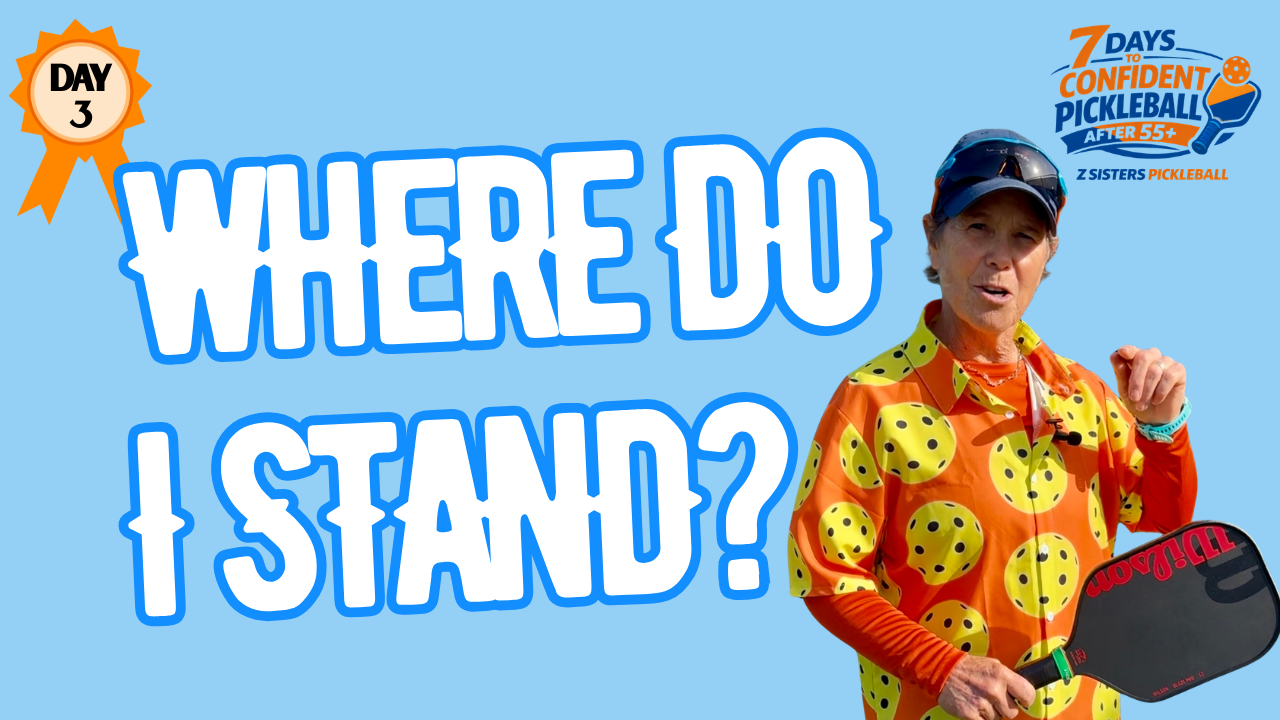
Welcome to Day 3 of your journey toward becoming a confident player! When you first step onto a Pickleball Court, the network of white lines can look like a giant, confusing puzzle. If you are over 55, you might be worried about having to run back and forth to cover all that space.
But here is the secret: the Pickleball Court is actually designed to help you. Once you understand the “map” and know exactly where to stand, you actually have to run less. You can let the court do the work for you, allowing awareness to beat speed every time.
Watch Day 3: Mastering the Map of the Pickleball Court
Before we dive into the details, watch this quick lesson to see the movement in action.
Understanding the Three Zones of the Pickleball Court
To make things simple, we break the court down into three distinct zones. Knowing these zones is the key to playing a smart, low-impact game that keeps you safe and winning points.
1. The Baseline: Your Starting Line
The baseline is the very back line of the court. This is where every point begins. When you are the server, you must stand behind this line. It represents the “back of the house.” While it’s where you start, the goal for most players is to move away from here as soon as the rules allow.
2. The Transition Zone: “No Man’s Land”
The area between the baseline and the kitchen is known as the transition zone. In the Z Sisters’ lessons, we often call this “No Man’s Land.” You don’t want to set up camp here! If you stay in this middle area, you are vulnerable to balls landing at your feet. It is a place you move through to get to your ultimate destination.
3. Home Base: The Kitchen (Non-Volley Zone)
The Kitchen is the most famous part of the Pickleball Court. It is the 7-foot area on both sides of the net. This is your “Home Base.” Why? Because you have a more than 65% chance to win the point when you are standing closer to the net at the kitchen line. From here, you can hit down on the ball and control the pace of the game.
Navigating Movement on the Pickleball Court
Many beginners 55+ are afraid they aren’t “fast enough” for this sport. The good news is that you can play pickleball “walking style.”
The Six-Step Rule
In our video, we demonstrate that it only takes about six comfortable steps to get from the baseline to the kitchen line. You don’t have to sprint. You just need to move with purpose. If you stay back at the baseline, your opponents will simply “dink” the ball or hit a drop shot that you can’t reach. By moving up, you take away their luxury of space.
Strategic Positioning on the Pickleball Court
There are two primary strategies for movement that every beginner should memorize:
- Serve and Stay: When you serve, you must stay back behind the baseline. Because of the “double bounce rule,” the return of serve must bounce before you can hit it. If you run in too early, the ball will hit you or land at your feet.
- Return and Move: When you are receiving the serve, your goal is to hit the ball and immediately move toward the kitchen line. Don’t run—just move steadily to get to that high-percentage winning position.
Take the Guide to the Court With You!
Learning the Pickleball Court is much easier when you have a physical guide to reference. Our booklet, 7 Days to Confident Pickleball After 55, is designed specifically for seniors who want to learn without the overwhelm.
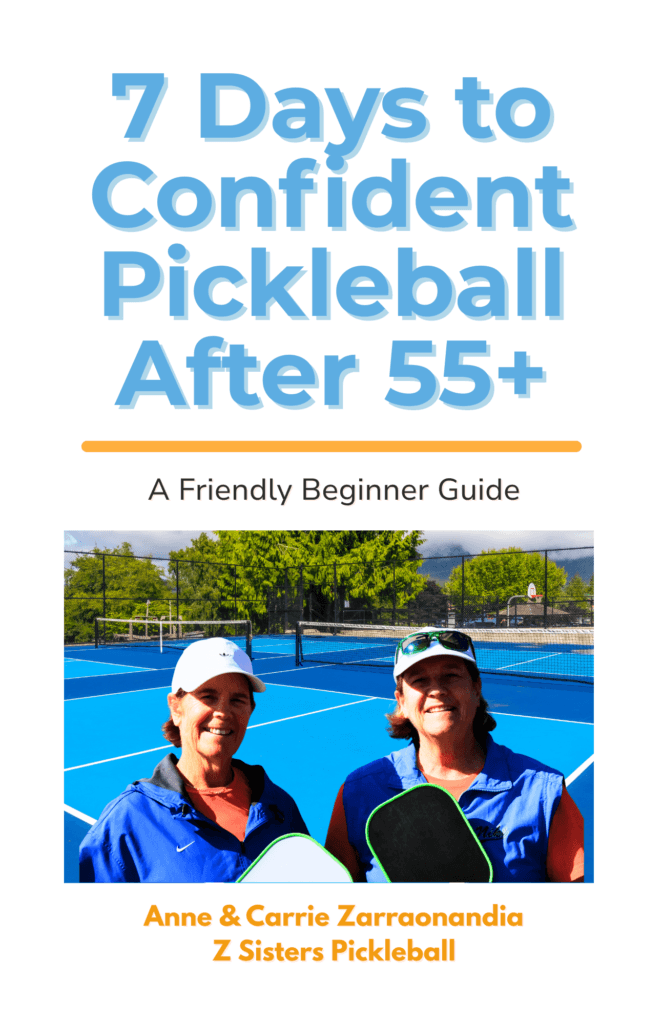
- Get the Paperback Edition on Amazon – Perfect for keeping in your sports bag!
- Download the Kindle Edition – Have it ready on your phone at any time.
As an Amazon Associate, I earn from qualifying purchases. This helps us keep creating free content for the 55+ community!
Key Rules to Remember While Standing on the Pickleball Court
The most important rule for your safety and your score involves the Kitchen line.
The Golden Rule: No Volleying in the Kitchen.
A volley is a ball you hit out of the air before it bounces. You can never stand inside the Kitchen (or even on the line) and hit a volley. If you do, you lose the point.
However, you can step into the kitchen anytime you want—you can live there, go on vacation there, or even just stand there—as long as you aren’t hitting a ball out of the air. If the ball bounces in the kitchen, you can absolutely step in to hit it.
Don’t Overthink the Dimensions
The Pickleball Court measures 44 feet long and 20 feet wide. That sounds big, but remember, you have a partner! Each of you only has a 10-foot wide space to cover.
When the ball goes down the middle, communication is key. Yell “Yours!” or “Mine!”—figuring it out with your partner is half the fun of the game.
Free Resource: 55+ Pickleball Confidence Cheat Sheet
Starting pickleball after 55 shouldn’t feel like a chore. We created a simple 1-page printable to help you step onto the court with total confidence. It includes: ✔ Easy reminders of the rules ✔ Clear positioning tips ✔ Simple movement cues ✔ Confidence builders for new players
Download Your FREE 55+ Pickleball Cheat Sheet Here
What’s Next?
As you get familiar with the Pickleball Court, your positioning will improve naturally over time. The best advice we can give you is: don’t overthink it.
Get out there, hit some balls, and enjoy the social, multi-generational magic of this sport.
Confused about how to keep track of the score while you’re out there? Scoring can be the most frustrating part for beginners. We’ve made it easy for you!
Watch our Easy Pickleball Scoring video to master the numbers before Day 4 below.
See you on the court for Day 4, where we talk about starting the point without the stress!
And if you are playing catch-up, are the blog posts for our Confident Pickleball series:
Day 1 – Is Pickleball After 55 Really Possible? (Hint: The Answer is a Resounding Yes!)
Day 2 – What Pickleball Equipment Do You Really Need After 55+?