You don’t need a partner, a ball machine or a court full of people to get better at pickleball. Some of my best practice happens when it’s just me, a paddle, and a basket of balls. In this post I’ll go through 15 solo pickleball drills that you can do on your own. They start with simple paddle control for beginners and work up to dinks, third-shot drops, lobs and spin for the 3.5–4.0 player.
Watch the full video below. Then use the written guide as your checklist the next time you have the court to yourself.
Why Solo Pickleball Drills Work
Practicing alone takes the pressure off. You’re not playing for points, nobody is asking “why did you try that shot?”, and you don’t have to wait for a partner to return the ball. You just keep hitting until the basket is empty. In tennis and pickleball we call that getting the reps in, and repetition is how a shot goes from “sometimes” to “automatic.”
Solo practice is also the perfect time to work on shots you don’t trust yet in a game. Try that dink into the front of the kitchen, or a deep lob from the baseline. If it doesn’t work, nobody loses a point.
What You’ll Need
- A paddle and a handful of balls (a basket or ball tote makes it easier)
- Targets: cones, a donut ring, a water bottle or even your paddle bag
- A straight “line” marker: a rope, a belt or a court line marker
- A wall (optional, but great for reflexes)
Beginner Paddle Control Drills
These first four drills teach you how the ball comes off a solid paddle. A plastic ball with holes doesn’t behave like a tennis ball, and these drills help you feel the difference.
1. Ups
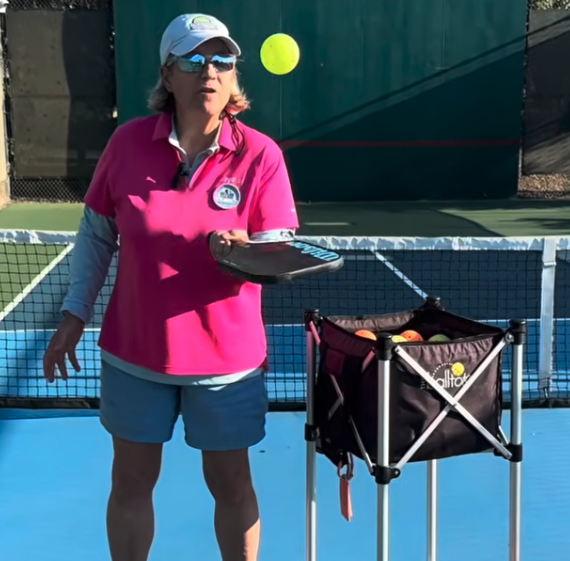
Hold the paddle in a handshake grip with the forehand (palm) side facing up. Bounce the ball straight up, just a little over your head, again and again. Count out loud to give yourself a goal: start with 10 in a row. Don’t add extra power. Keep each hit small and self-contained.
2. Flip-Flops
Same idea, but turn the paddle over between each bounce so you alternate forehand and backhand faces. Keep your eyes on the ball and hold the grip loosely. Squeezing too hard makes the ball fly off. This one is great for hand-eye coordination. And if the ball goes haywire, you’ll get some extra exercise chasing it!
3. Side Ups (Paddle Edge Control)
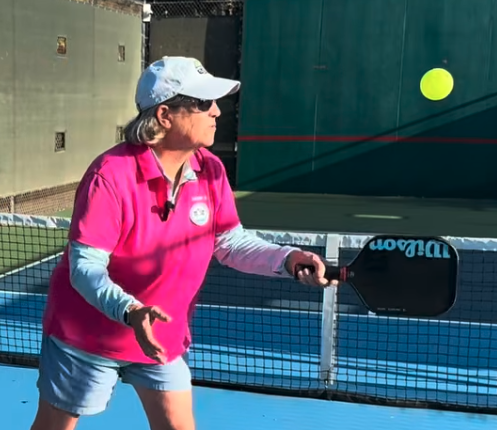
Now try bouncing the ball on the edge of the paddle. My paddle is 16 mm thick and the edge is flat, so it’s doable, but it takes real focus. Get balanced on your feet, hold the paddle out in front, and watch the ball. My record is past 50. Watch my record-setting side ups here. How many can you get?
4. Cone Pour, Hit and Catch
Hold a training cone in your non-paddle hand. “Pour” the ball out of the cone, pop it up with the paddle, then catch it back in the cone. Add a flip-flop before the catch to make it harder. This drill gets both sides of your body working together, and it’s a lot of fun.
Target Practice and Serving Drills (Beginner to 3.0)
5. Drop-and-Hit Target Practice
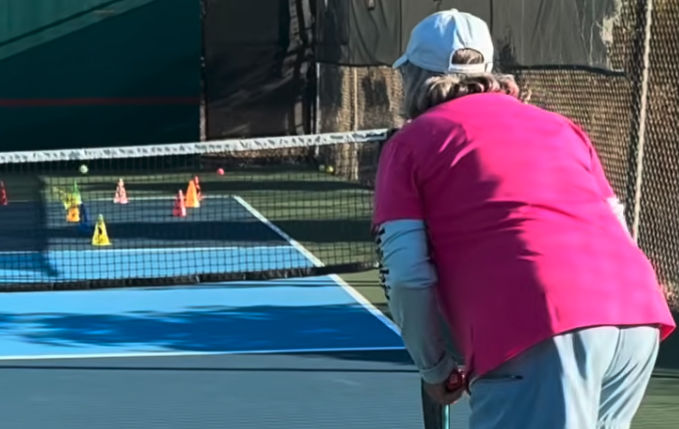
Set cones (or a water bottle, or your paddle bag) deep in the court on the other side of the net. Drop the ball, use your legs, and swing the paddle upward to lift the ball over. A deep ball is much harder for your opponent to return, so aim for the back of the court. Practice backhands too: cross your arms, hold the ball over the paddle, then drop and lift.
6. Serve to Targets
Serving is the most common way to practice alone, and it’s the one shot you’re in full control of. Practice from both sides. The game starts with a serve from the right, and if you win the point you move to the left. Aim deep into the crosscourt service box.
Many newer players like the drop serve. Simply let the ball fall out of your hand and hit it after it bounces. You can’t toss it up or throw it down. Your feet must start behind the baseline, but the ball can be dropped inside the court. Try both forehand and backhand serves, and put targets in the box. Want more structure? Join our free 30-Day Serving Challenge.
7. Hit Into the Circle
Put a donut ring (or any marker with a hole) on the ground next to you. Pop the ball up in the air and try to make it land inside the ring or on its edge. “Bingo!” This builds the touch and feel you’ll need for soft shots. It’s especially fun if you love targets as much as I do.
8. Self-Rally Over the Line
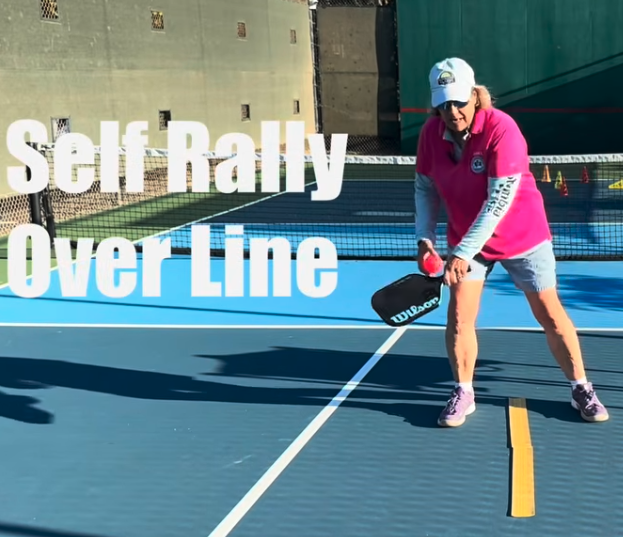
Lay a rope or belt on the court. Straddle it with one foot on each side, and rally the ball back and forth over the line with yourself. Hit softly and stay in control. Use small shuffle steps and keep your feet moving. You’ll feel this one in your quads. It’s a sneaky good workout!
Soft-Game Drills: Dinks, Drops and Lobs
9. Self-Fed Kitchen Dinks
When you bounce the ball and hit it yourself, that’s a self-feed. Put a donut ring in the kitchen on the far side of the net. Self-feed and dink the ball into the circle. The softer you hit, the more control you have. Bend your knees, get underneath the ball and keep a light grip. If you swing too hard, the ball sails long or goes into the net.
10. Front-of-the-Kitchen Dinks
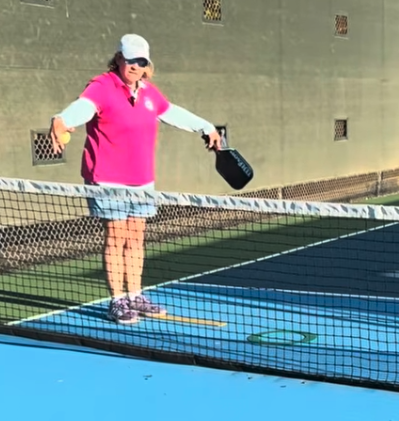
The kitchen is 7 feet deep. Lay your rope across the middle, about 3½ feet from the net, and try to land your dinks in the front half. Your opponent has to step into the kitchen to reach those balls and then hurry back out. Work on both forehand and backhand. Watch the apex: the ball should peak on your side of the net and drop on theirs. Also remember the net is 34 inches in the center and 36 inches at the sidelines, so crosscourt dinks need a little more lift.
11. Midcourt and Backcourt Touch Practice
Leave your targets in place and move back to the transition zone, then to the baseline. Hitting the same soft shot from farther away teaches you how much (or how little) power you really need. Don’t give your opponent a high “sitter” they can smash. Keep the apex on your side so the ball drops on theirs.
12. Deep Lob and Third-Shot Drop
From the baseline, open your paddle face, get under the ball and lift it high and deep. A good lob goes over your opponent’s paddle reach and lands in the back of the court. If it’s short, it gets smashed! Then practice your third-shot drop: a soft shot that clears the net and falls into the front of the court. Hit lots of them to “measure the shot” and find out what lands in and what goes out. For more help, see our third-shot drop teaching aid video.
Wall Drills and Spin Drills (3.5–4.0 and Beyond)
13. Wall Drills: Groundstrokes and Volleys
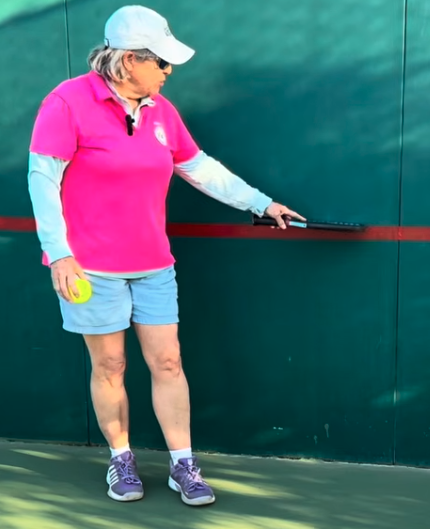
The wall is your most reliable practice partner. It never misses. Mark a line on the wall at net height and keep your shots above it. Start by letting the ball bounce, alternating forehand and backhand. Then try volleys. If the ball comes back too fast, take power off: shorten your swing, lighten your grip and slow down your paddle. Wall drills sharpen your reflexes and keep your eye on the ball. Find more in our solo wall drills video.
14. Topspin at the Net
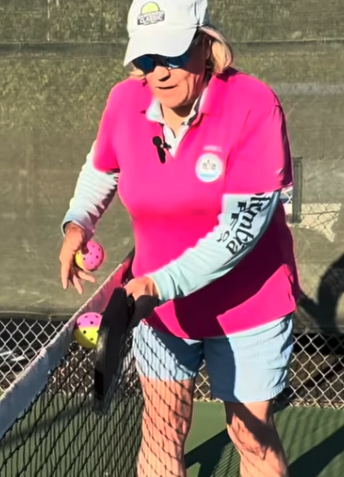
Many 3.5–4.0 players use topspin on low balls. To feel it, squeeze the ball between your paddle and the net tape, then pull straight up. Brushing up the back of the ball creates topspin, and that makes the ball dive into the court. A two-tone ball (we call ours “the cat toy”) lets you see the rotation. This is an advanced shot, but anyone can start learning it. Want to see spin in slow motion? Watch our beach ball spin demonstration from Mexico.
15. Underspin and the Slice Return
Yes, you can practice underspin alone! Phase one: cut high to low under the ball so it pops straight up. Phase two: do that a few times (“under, under, under”) and then send one over the net. The same slice works as a return of serve on a short ball. Come in, slice underneath it, and move up to the non-volley zone line. The backhand slice is usually easier than the forehand. On the forehand, turn your shoulders sideways.
Gear We Use for Solo Practice
- JOOLA Graf 16mm paddle
- Franklin X-40 balls
- Gamma two-tone ball (“the cat toy”)
- Orange training cones
- Donut ring targets
- Court line marker
- Racket Pets ball tote cart
No gear? A rope, a belt or a water bottle works just fine. See everything we recommend on our Stuff We Love page.
Solo Pickleball Drills: FAQ
Can you practice pickleball by yourself?
Absolutely. With a paddle, some balls and a few simple targets, you can work on paddle control, serves, dinks, drops, lobs and spin. No partner or ball machine required.
What is the best solo pickleball drill for beginners?
Start with “ups” and flip-flops for paddle control, then serve to targets. Serving is the one shot you control completely, so it’s the easiest to practice alone.
How do I practice dinking without a partner?
Self-feed the ball and dink it into a target in the kitchen. Then lay a rope across the middle of the kitchen and aim for the front half. Practice from the transition zone and the baseline too.
Make an Appointment With Yourself
Time flies when you’re practicing solo! Put it on your calendar like any other appointment. Even 20 focused minutes builds skills that carry right into your next game. Practice at your own pace, challenge yourself, and have fun.
What’s your favorite thing to practice on your own? Tell us in the comments. If you’re just getting started, grab our book 7 Days to Confident Pickleball After 55+ and check out our other Books by the Z Sisters. You can also join our newsletter to get every new video.
Disclosure: Some links in this post are affiliate links. As an Amazon Associate, we earn from qualifying purchases at no extra cost to you.